When seeking asylum in another country, gaining status as a religious refugee could, in some cases, be a life-or-death situation. But what makes a person a religious refugee? Determining that may not be so clear. The legal questions used to test for refugee status are complex, and historically the process has lacked consistency.
To complicate matters even more, a common understanding of what religion is in a refugee’s life and how it impacts their survival under persecution is difficult to characterize.
Assistant professor of business Dr. Raymond Chiu calls this conceptualization. It includes all the ways religion can be described and measured, including the ways religious people become mature and live out their beliefs in their work and life. This underpins much of Chiu’s research, which has also included work on religious diversity in the workplace and the role of religion in the tax-exempt status of charities.
“I find this kind of research to be very fulfilling,” says Chiu. “It helps me to understand my own faith better.”
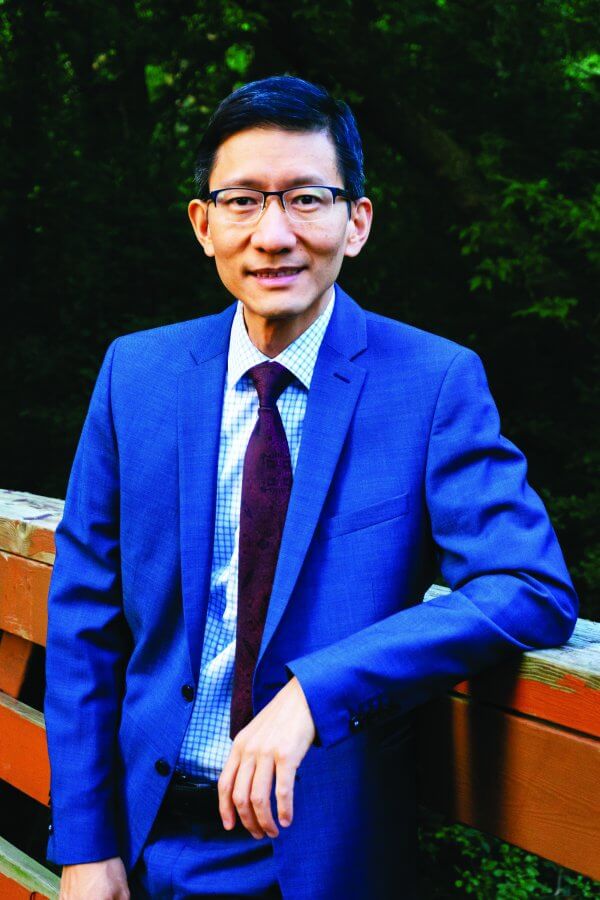
But he has found throughout his various research projects that the ways people think about their faith at work and in society are not always the same as what is taught in Sunday school. Clearly articulating one’s faith experience becomes particularly important when it becomes part of a legal process determining whether someone in danger is truly of the faith that they claim is theirs. Christians are considered the most persecuted group in the world, but Muslims, Jews, and other faiths are not far behind.
“If the refugee determination system is not fair, if it’s not assessing people’s faith in a way that’s true to their lived experience, then they are mistreated and they have no place to go,” says Chiu. “Fair legal processes also affect Canada’s ability to defend religious freedoms and hence our moral legitimacy in the world,” he adds. “We want to act compassionately toward migrants, but we’ve all seen what happens when refugee systems break down and become blunt instruments of power.”
With the assistance of a $60,000 federal grant from the Social Sciences and Humanities Research Council, six faculty and eight student research assistants from Redeemer and university partners have participated in the analysis of over 70 articles and more than 320 cases from the Immigration and Refugee Board of Canada.
In order to be granted asylum, the claimants must be assessed to determine if they are indeed religious and if the mistreatment they have experienced is because of that religiosity. The project will bring better understanding of the thought processes of refugees as well as how they apply their faith in the face of serious mistreatment. This includes the tremendous hope and strength that faith brings in times of trauma and loss.
“It really comes down to understanding the difference that your faith makes,” says Chiu. This is something he became passionate about while he was studying at Tyndale Seminary.
“We can’t really have a witness and talk about our faith if we can’t talk about what the effect is,” said Chiu. He also points out that this is not just a personal or internal matter, but has significant implications for the public sphere. “People of faith can’t have a safe and productive role in the world—where they work to survive, in the charitable sector, or as religious minorities—if we can’t explain how religion is a unique type of identity that has a special role in society.”
I find this kind of research to be very fulfilling … It helps me to understand my own faith better.
Chiu hopes that his research can eventually be used practically to improve fairness for claimants and help them prepare for hearings, by providing guidance to board adjudicators and the claimants’ counsel.
“In those hearings, it becomes critically important to make correct assumptions about religion. What is genuine religiosity, and what are the correct inferences that you can make about the relationships between their faith, thoughts and actions? There has been a history of adjudicators focusing mainly on doctrinal and historical questions that are oftentimes not based on how people think of their faith and lean on it when they go through suffering.”
In the future, Chiu has aspirations to take his research international, disseminating his findings among the other countries that abide by the UN Convention.
“Refugee claimants face many barriers despite being ‘safely’ within Canadian borders and I cannot imagine successfully navigating Canada’s refugee claim system without help,” says Rev. Scott Jones, executive director of Micah House, a refugee settlement home in Hamilton. Micah House generously participated in Redeemer’s interdisciplinary capstone course, involving students in a nationwide initiative to support claimants through the hearing process.
Chiu and the team have culminated the work to date with the launch of their website, religiousrefugees.org, which contains resources for claimants in the application process. Interested parties are invited to sign up on the website for research and training updates.